UEMO Calls for Stronger Recognition of Family Medicine and Professional Independence at CPME General Assembly
Berlin, 13–14 November 2026
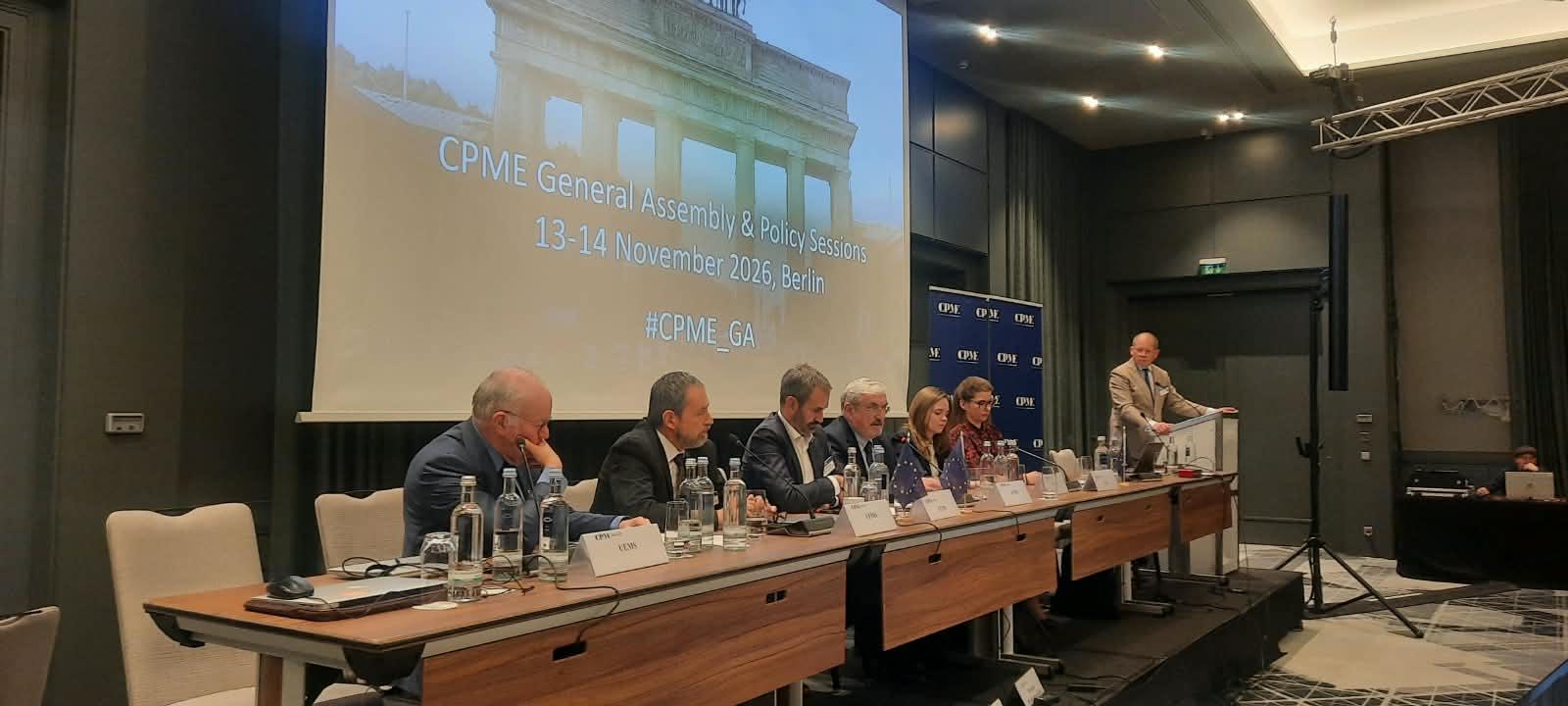
UEMO participated in the General Assembly of the Standing Committee of European Doctors (CPME), held in Berlin on 13–14 November 2026, contributing to discussions on the future of European healthcare, physicians’ professional independence and the recognition of medical qualifications.
The meeting opened with the conference “Revisiting the Ottawa Charter: European Perspectives on Health Promotion and Policy”, marking 40 years since the adoption of the Ottawa Charter. Discussions highlighted the importance of prevention, effective public health regulation and coordinated European action to address cardiovascular diseases, cancer, unhealthy lifestyles and health inequalities. The discussion emphasized the need for clear, evidence-based communication to counter health misinformation.
UEMO Highlights a Fundamental Threat to Physicians’ Professional Independence
Representing UEMO, Dr Călin Bumbuluț highlighted a fundamental risk to professional independence: the growing discrepancy between modern medical competencies and outdated European regulatory frameworks.
Professional independence, UEMO stressed, requires more than freedom of clinical judgement. It also depends on the appropriate legal recognition of physicians’ qualifications, competencies and responsibilities.
Family Medicine/General Practice illustrates this challenge particularly clearly. Directive 2005/36/EC maintains separate regulatory approaches to specialist medical training and specific training in General Practice. While several European countries have established four-year or longer postgraduate training programmes in Family Medicine/General Practice, reflecting its complexity and specialist competencies, the European regulatory framework continues to rely on provisions inherited from an earlier stage of the profession’s development.
This discrepancy may create uncertainty, administrative inconsistencies and unequal recognition of professional qualifications, potentially weakening physicians’ professional independence.
UEMO therefore reiterated its call for the explicit recognition of Family Medicine/General Practice as a medical specialty under Annex V, point 5.1.3, of Directive 2005/36/EC, supported by modern, competency-based training standards, while fully safeguarding acquired rights and professional mobility.
As emphasised during the panel:
“Recognising professional competence is a prerequisite for protecting professional independence. And protecting professional independence ultimately means protecting patients.”
European Cooperation on Key Healthcare Challenges
The General Assembly also addressed major European health policy priorities, including retaining doctors within sustainable healthcare systems, combating health misinformation, improving digital health literacy, protecting patients’ health data and ensuring that the European Health Data Space supports clinical practice without increasing administrative burdens.
Further discussions focused on professional qualifications and mobility, shortages of medicines and medical devices, and protecting children in digital environments.
UEMO welcomes continued cooperation among European medical organisations to ensure that European legislation reflects contemporary medical practice, safeguards professional autonomy and places patient safety at the centre of healthcare policy.
UEMO remains committed to promoting Family Medicine as a fully recognised medical specialty and defending the professional independence of family physicians throughout Europe.